Sunday, 8 April 2018

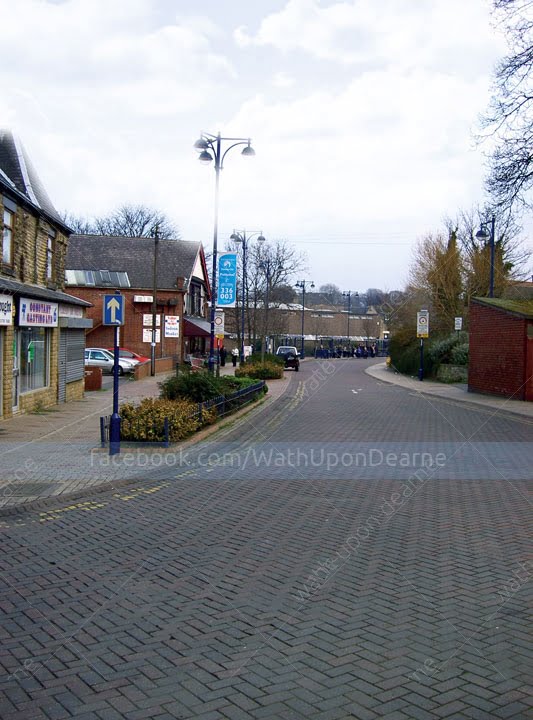
Montgomery Rd. Wath-upon-Dearne

Memories Of Wath-upon-Dearne

THE QUEEN OF VILLAGES


A view from the bottom of West Street looking down toward the Town Centre. Can you name some of the shops on the left side of the road past and present?


[caption id="attachment_19491" align="alignnone" width="533"] Montgomery Road[/caption]


Here is another uploaded picture from our numerous archived collections. You can SHARE all our community posts and images. Tell your friends and family to join in and be sure to post your news, events and most of all, your comments to any of the published content which is intended for everyone's enjoyment.

take-me-back-to-facebook

[catlist name=Latest News]

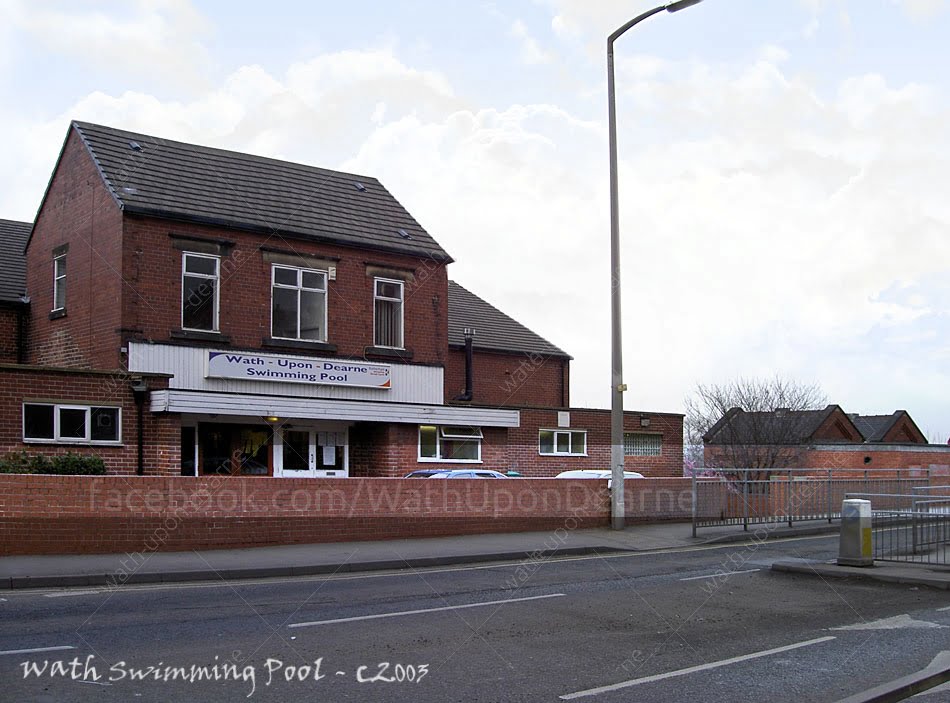
The Old Swimming Pool - Wath

Wath-upon-Dearne


The old Swimming pool in Wath-upon-Dearne, South Yorkshire UK. The building was sold off by Rotherham Borough Council (even though it was recreational property designated for the surrounding community), to a privately owned car wash proprietor. The terms of the sale agreed by the purchaser are to have the grounds re-assigned as a childrens activity area after 5 years from date of purchase. This remains to be seen.


Here is another uploaded picture from our numerous archived collections. You can SHARE all our community posts and images. Tell your friends and family to join in and be sure to post your news, events and most of all, your comments to any of the published content which is intended for everyone's enjoyment.

take-me-back-to-facebook

[catlist name=Latest News]

Thursday, 22 March 2018

Wath upon Dearne village centre - 1920's

THE QUEEN OF VILLAGES


Wath-upon-Dearne village centre c1920's. No Roundabout and trams in operation.


The Dearne District Light Railway was a tramway linking Barnsley with the towns of Wombwell, Wath, Bolton on Dearne and Thurnscoe. Opened on 14 July 1924, it was the last street tramway to be built in the UK before the modern era (starting in the late 20th century) and one of the first to shut. It was granted a Light Railway order (under the 1896 Light Railways Act) in 1915, but World War I delayed its opening.

A "car barn" was built at Wombwell, which later became Yorkshire Traction's bus depot, and single deck vehicles were used throughout its nine-year life span. Because of mining in the area the track was laid on wooden sleepers and covered over and was all single track with passing loops, which was the reason for its downfall. When motorbuses started to compete on the same route as the DDLR it was found that because the trams had to wait to pass each other, the bus could complete the journey much quicker and so the electric vehicles had to go.

Very few traces of the former DDLR remain now, as the last tram journey reached the end of the line on 30 September 1933, soon to be replaced by the local bus service. The body of a former DDLR car is still in use as a summer house in a garden on the outskirts of Sheffield.

Here is another uploaded picture from our numerous archived collections. You can SHARE all our community posts and images. Tell your friends and family to join in and be sure to post your news, events and most of all, your comments to any of the published content which is intended for everyone's enjoyment.

take-me-back-to-facebook

[catlist name=Latest News]

Wednesday, 21 March 2018

We All Suffer War

Fascinating Historical Photos

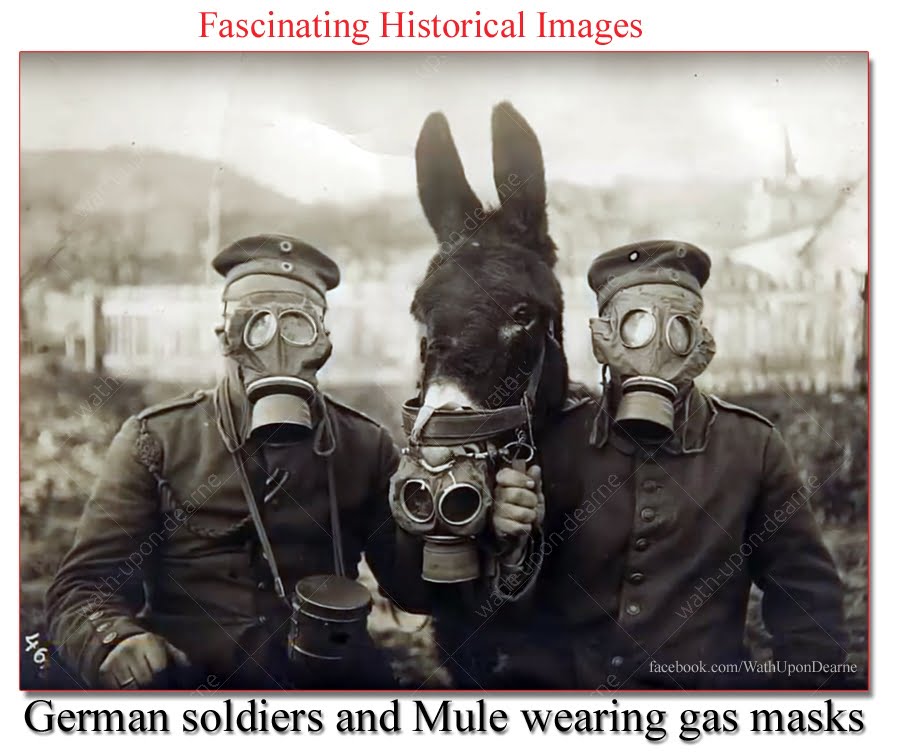
WW2 German Field Gas Masks


The gas mask is a mask used to protect the user from inhaling airborne pollutants and toxic gases. The mask forms a sealed cover over the nose and mouth, but may also cover the eyes and other vulnerable soft tissues of the face. Some gas masks are also respirators, though the word gas mask is often used to refer to military equipment (e.g. field protective mask). The user of the gas mask is not protected from gas that the skin can absorb. Most gas mask filters will last around 24 hours in a nuclear biological chemical (NBC) situation.

Airborne toxic materials may be gaseous (for example, sulfur mustard and chlorine gas) or particulates (such as biological agents). Many gas masks include protection from both types. Gas masks are used in construction to protect against welding fumes, in demolition to protect against asbestos or other hazardous particles, and in the chemical industry when handling hazardous materials, as in making repairs to leaking equipment or cleaning up after spills; workers are usually issued gas masks as a precaution against leaks.


Here is another uploaded picture from our numerous archived collections. You can SHARE all our community posts and images. Tell your friends and family to join in and be sure to post your news, events and most of all, your comments to any of the published content which is intended for everyone's enjoyment.

take-me-back-to-facebook

[catlist name=Latest News]

History In Colour

Fascinating Historical Photos

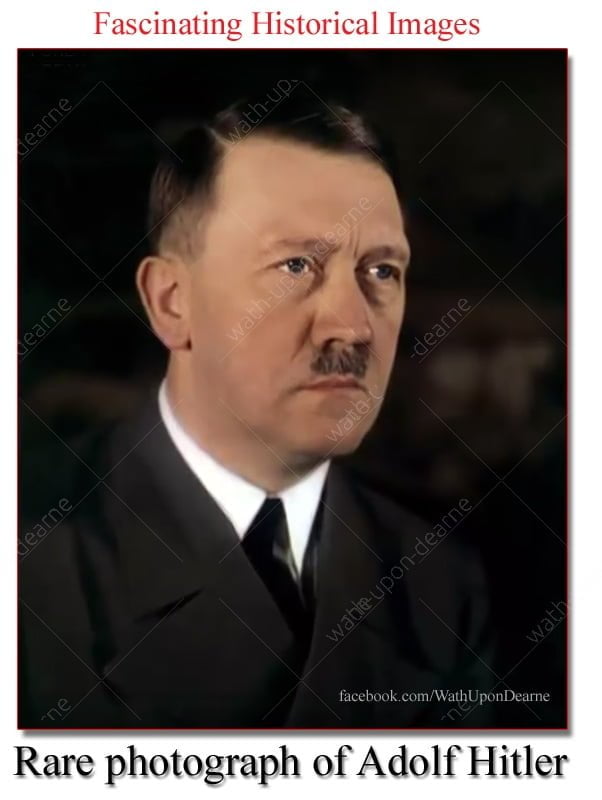
Hitler Photograph - Rare


Adolf Hitler; 20 April 1889 – 30 April 1945) was a German politician who was the leader of the Nazi Party (Nationalsozialistische Deutsche Arbeiterpartei; NSDAP), Chancellor of Germany from 1933 to 1945 and Führer ("Leader") of Nazi Germany from 1934 to 1945. As dictator, Hitler initiated World War II in Europe with the invasion of Poland in September 1939, and was central to the Holocaust.

Hitler was born in Austria—then part of Austria-Hungary—and was raised near Linz. He moved to Germany in 1913 and was decorated during his service in the German Army in World War I. In 1919, he joined the German Workers' Party (DAP), the precursor of the NSDAP, and was appointed leader of the NSDAP in 1921. In 1923, he attempted to seize power in a failed coup in Munich and was imprisoned. While in jail he dictated the first volume of his autobiography and political manifesto Mein Kampf ("My Struggle").

After his release from prison in 1924, Hitler gained popular support by attacking the Treaty of Versailles and promoting Pan-Germanism, anti-semitism and anti-communism with charismatic oratory and Nazi propaganda. He frequently denounced international capitalism and communism as being part of a Jewish conspiracy.


Here is another uploaded picture from our numerous archived collections. You can SHARE all our community posts and images. Tell your friends and family to join in and be sure to post your news, events and most of all, your comments to any of the published content which is intended for everyone's enjoyment.

take-me-back-to-facebook

[catlist name=Latest News]

Wath Central WMC

Memories Of Wath-upon-Dearne

THE QUEEN OF VILLAGES


Click on the image for a larger view.
Like many other pubs and clubs the Central has disappeared like the snow in summer. There was nothing finer than the annual club trip to Cleethorpes with 30 bob spending money, crisps and pop.


Here is another uploaded picture from our numerous archived collections. You can SHARE all our community posts and images. Tell your friends and family to join in and be sure to post your news, events and most of all, your comments to any of the published content which is intended for everyone's enjoyment.

take-me-back-to-facebook

[catlist name=Latest News]

Tuesday, 20 March 2018

America Joins The War

Fascinating Historical Photos

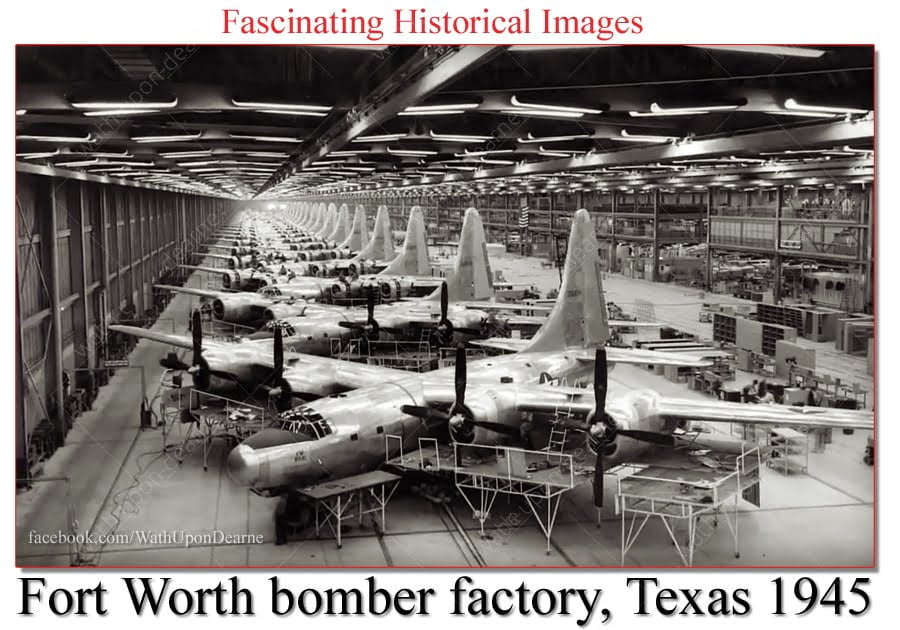
Fort Worth USA Bomber


Fort Worth was the manufacturing base for the WW2 acclaimed USA B-24 Liberator Bomber.

The B-24 Liberator was first proposed to the Air Corps in 1938, and with the start of World War II in Europe, the French Government placed an order for 60 aircraft, sight unseen. In 1940, Britain ordered 164. These large foreign orders were placed well before the US military placed similar-sized orders, and played a large role in getting the B-24 project going.

In order to meet the projected demand for the B-24, in early 1941 the government established the Liberator Production Pool Program. Under this program, Consolidated would produce Liberators at the new plant in Fort Worth to supplement the B-24 production in its main San Diego plant. Sub-assemblies and components of B-24Ds would first be sent to Fort Worth and assembled from smaller plants until Fort Worth could produce the complete aircraft.

Three designations of the Liberator, B-24D, B-24E, and B-24G would be flown to Fort Worth from Consolidated production lines in San Diego, Willow Run, Michigan and North American Aircraft in Dallas.

At Fort Worth, the aircraft would be processed though what was called a "modification center" where the aircraft would be updated with the latest modifications before being turned over to the Air Force and flown out from the Fort Worth Army Airfield, which it shared a common airfield with. Over 3,000 B-24 aircraft were manufactured, assembled and modified during the war.

In February 1943, the Army directed Consolidated to shift its production of the B-32 Dominator very heavy bomber from San Diego to Fort Worth, to streamline PBY Catalina production in San Diego for the Navy. The B-32 program, however, was beset with technical problems and by the end of December 1944, only five aircraft had been delivered. In comparison, the B-29 Superfortress had been in combat for nearly six months. Before the program's termination in September 1945, only 124 B-32s were produced in Fort Worth.


Here is another uploaded picture from our numerous archived collections. You can SHARE all our community posts and images. Tell your friends and family to join in and be sure to post your news, events and most of all, your comments to any of the published content which is intended for everyone's enjoyment.

take-me-back-to-facebook

[catlist name=Latest News]